




Request an appointment
  • Price Promise

  • Rated Excellent

  • Fully Guaranteed

  • Over 40 years of value

Hillarys homepage1800 882 9171800 882 917Request a brochureRequest an appointment

A guide to decorating with geometric patterns

Victoria Robinson product manager Author Victoria RobinsonProduct ManagerWritten 17/11/2026
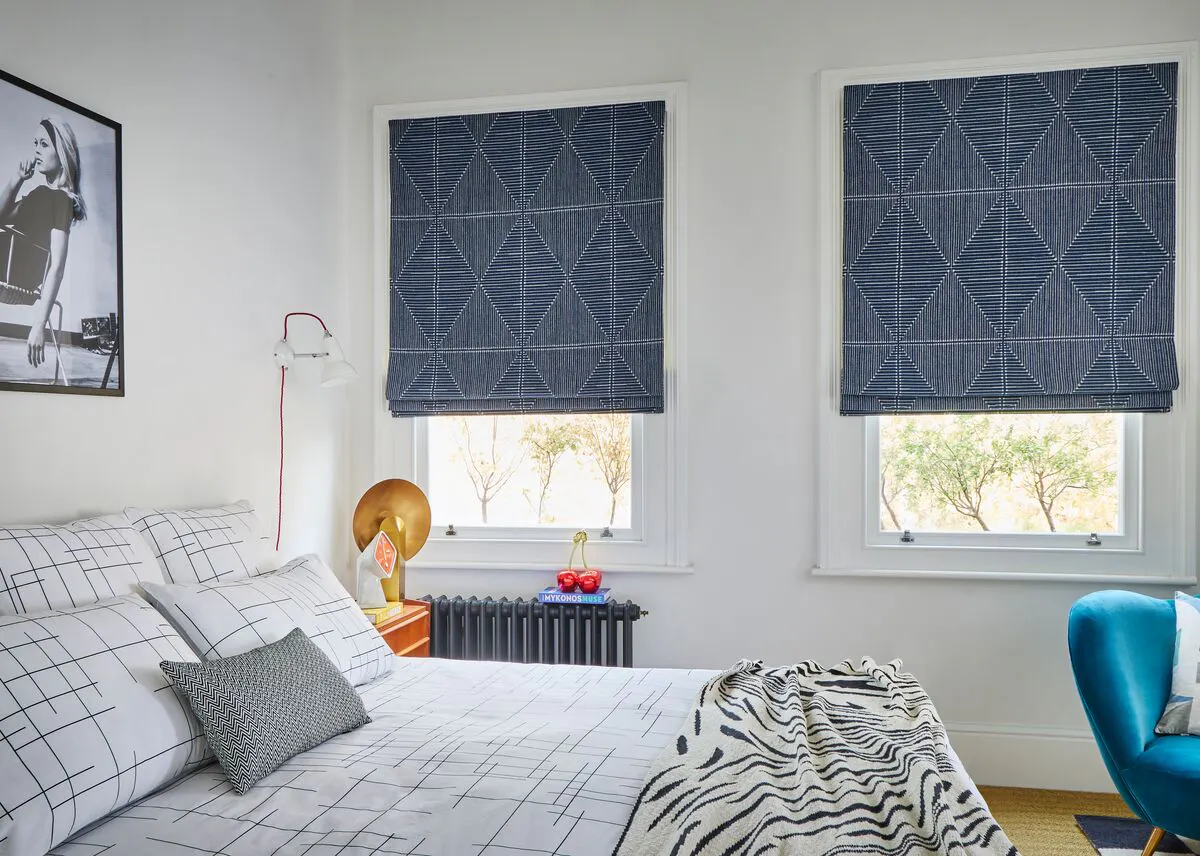
Bright bedroom with two navy geometric Roman blinds, monochrome grid bedding, a gold lamp on a wooden bedside table and a blue accent chair.

Geometric patterns are one of those design trends that never really disappear. They've been bringing shape, colour and character to our homes for decades. 

The beauty of geometric design is its versatility. Depending on the colours, scale and motifs you choose, it can feel contemporary, retro, playful or timeless. Here's how to decorate with geometrics and make them feel at home in your space. 
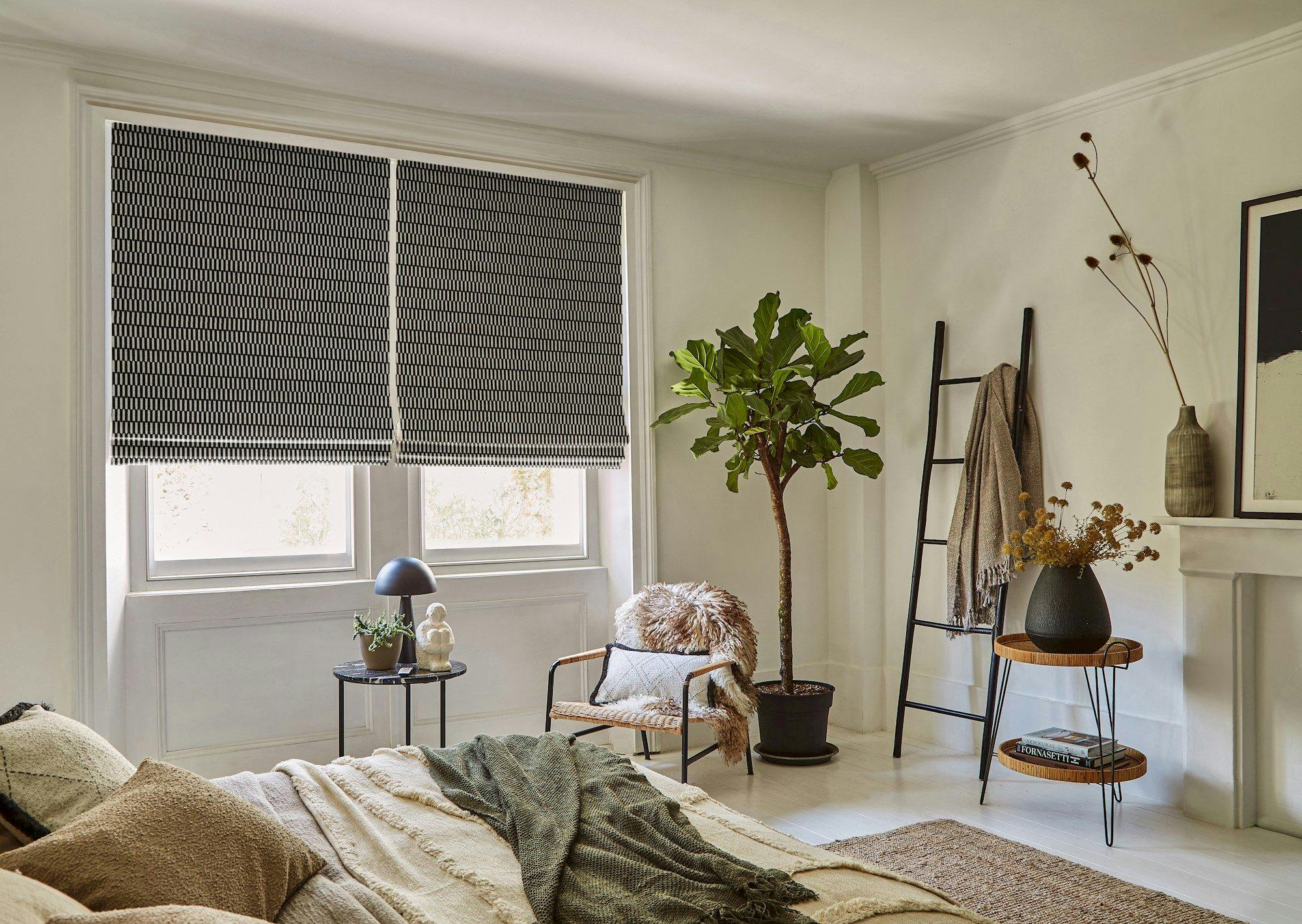
Room with a bed covered in neutral linens. Black Roman shades cover windows. Plant, chair, and ladder decor in corner. Lamp on side table near window and bed.

Understanding geometric design

Geometric pattern design is built around repeated shapes and lines. Some prints are instantly recognisable, such as stripes or checks, while others are more abstract and artistic. 

While geometrics can take many forms, they're all built on the same foundations of shape, structure and repetition. It's these simple elements that give them a distinctive character. 

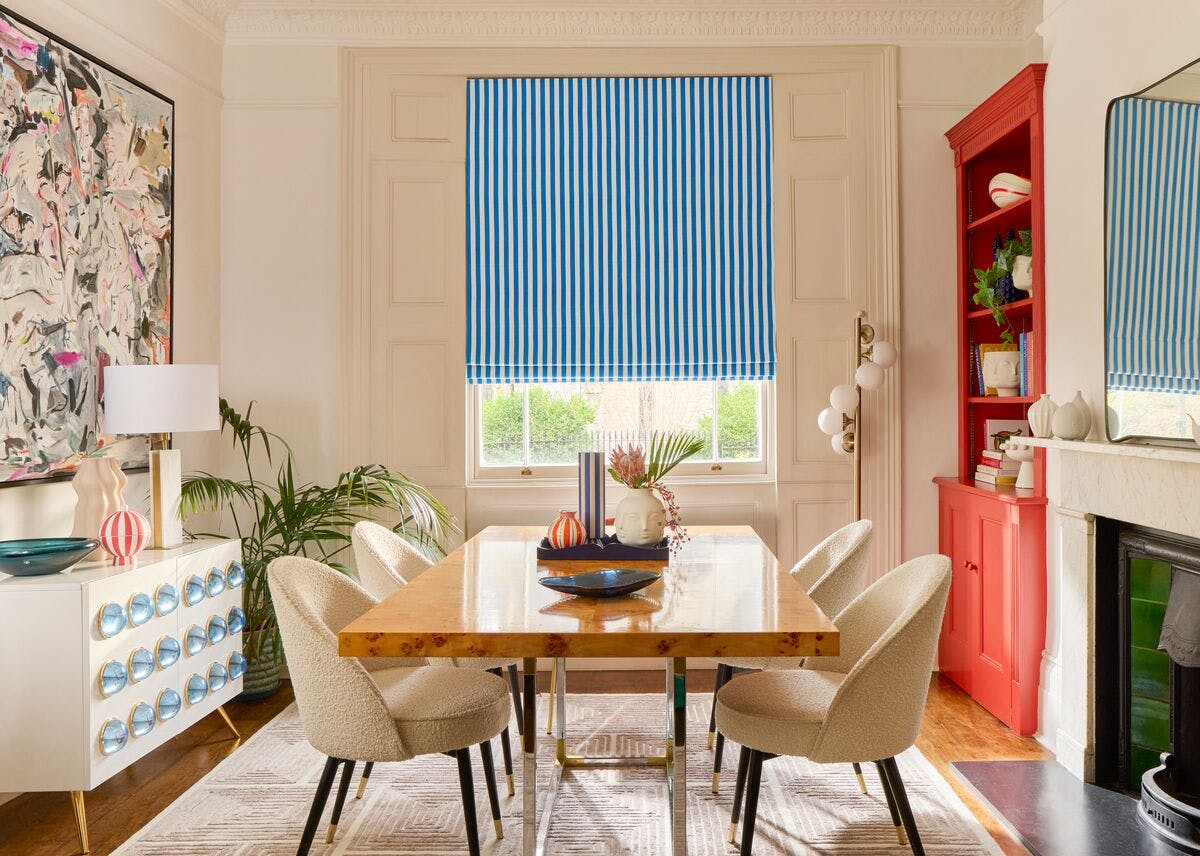
Modern dining room with a bright blue striped Roman blind, wooden dining table, cream chairs and bold colourful décor.

A familiar favourite

Stripes are one of the most recognisable geometric designs. The repeated vertical lines in this Roman blind from our Jonathan Adler collection bring a sense of structure to the room, while the vibrant blue gives the scheme a fresh, uplifting feel. 

Stripes have been used in interiors for generations, which is perhaps why they feel so natural in a wide range of settings. They're often a good introduction if you're experimenting with pattern for the first time. 

Classic kitchen with checkerboard curtains at French doors, cream cabinets, chequered tiles and a view to a sunlit patio garden.

The power of repetition

One of the easiest ways to decorate with geometrics is to repeat shapes throughout the room. Here, the checkerboard motif appears in the rug, tiles and curtains from our Jonathan Adler collection.  

The success of checkerboard designs comes from their simplicity. With just one repeated shape, they can feel playful, contemporary or even retro depending on the colours and materials around them. 

Cosy nook with mustard Roman blinds, a mustard sofa, colourful cushions, a round white table and teal chairs under exposed ceiling beams.

Pattern with personality

Larger-scale motifs can help define a room’s personality. These Lisbon Roman blinds from our Jonathan Adler collection feature intricate detailing that immediately becomes part of the room's character.  

Patterns like this don't need much competition. When the design has plenty to say, a few carefully chosen colours and textures often do the rest of the work. 

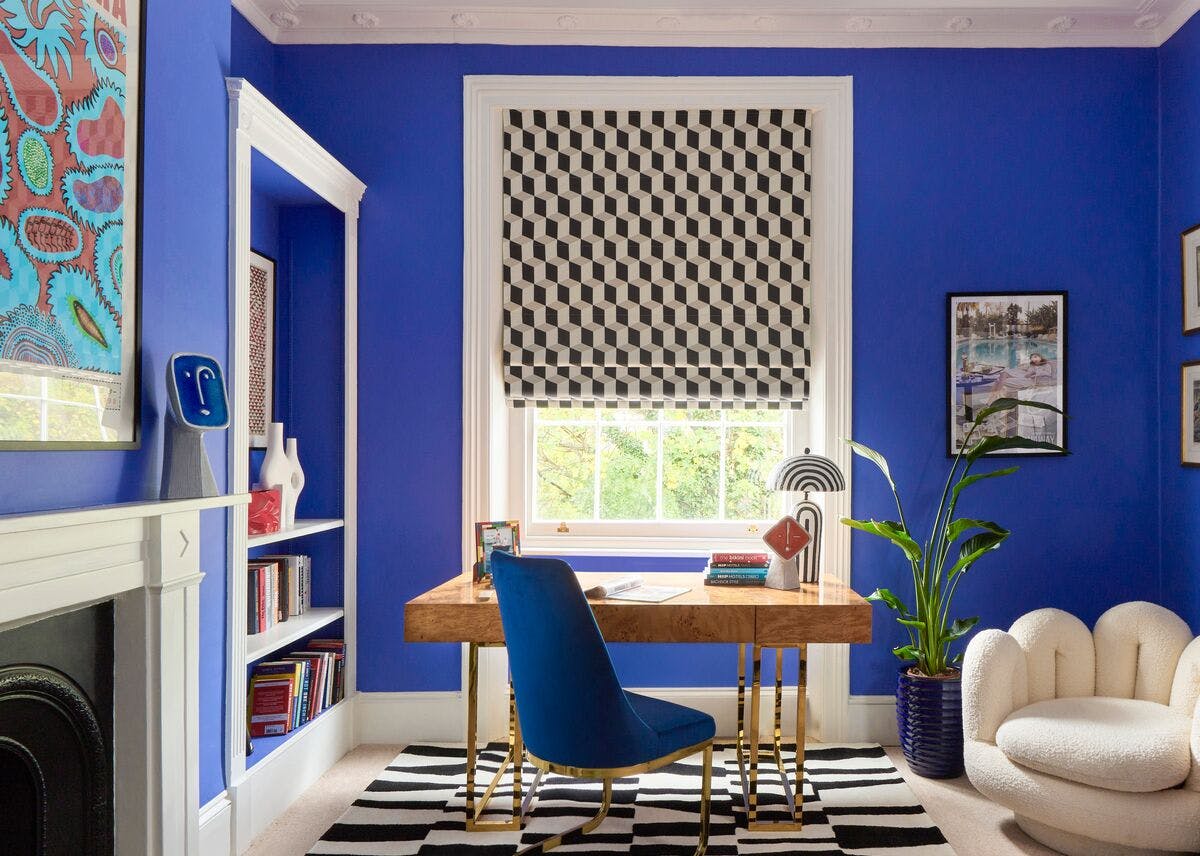
Bold blue home office with a geometric black‑and‑white Roman blind, wooden desk, blue chair and modern décor around a central window.

A touch of illusion

Some geometric patterns play clever tricks with perspective, creating designs that seem to shift and change as you look at them. This Cubes Roman blind from our Jonathan Adler collection is a great example. The repeating squares create a three-dimensional illusion, making the pattern feel almost architectural. 

Designs like this rose to popularity during the mid-century era and still feel striking today. They bring a sense of creativity and curiosity to a room. 

  • “Mid-Century design is about clean lines, and that’s a philosophy I bring to all my work. I want to communicate using an economy of gesture. I’m a minimalist designer and a maximalist decorator.” 

    Jonathan Adler, potter and designer

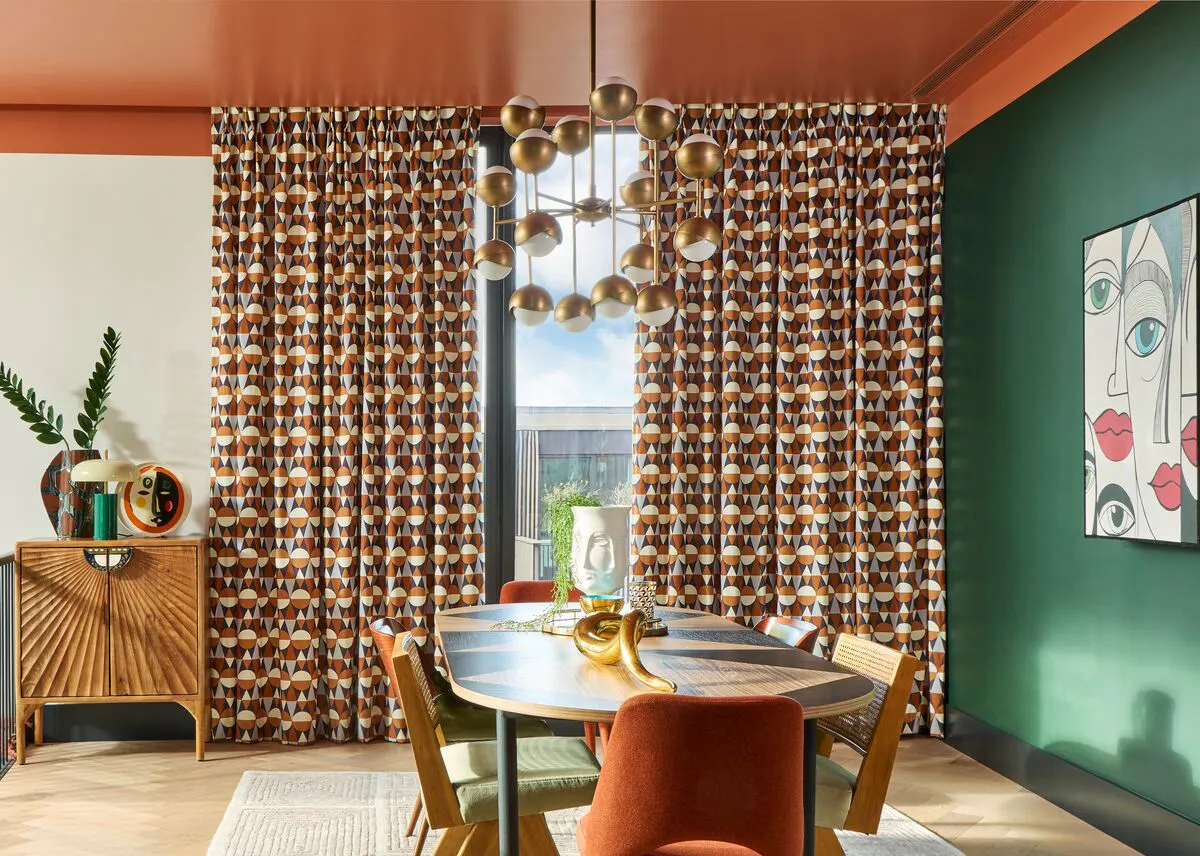
A vibrant dining room with tall windows dressed in bold patterned curtains, framing a view of the outdoors behind the round table. 

Beyond straight lines

Geometric patterns aren't all squares, diamonds and triangles. Curved shapes can have just as much impact. This Piccadilly Dots design from our Jonathan Adler collection is made up of repeating circles and semi-circles arranged in a structured pattern.  

Rounded motifs often have a softer quality than angular designs. For anyone who likes the idea of geometrics but wants something less graphic, they can be a great place to start. 

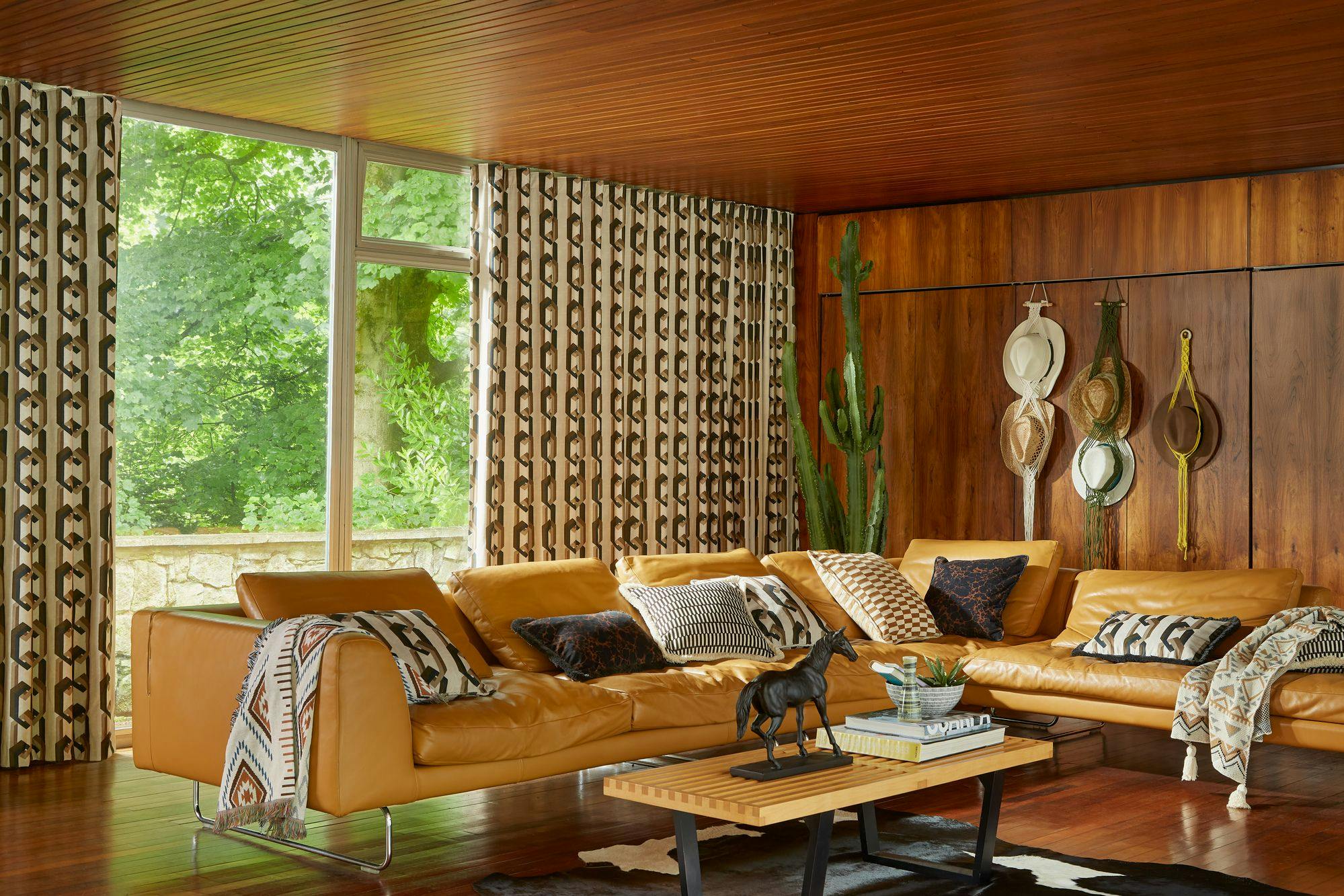
2024 2024 launch chain of fools hillaryslifestyle living room location photography lounge mono new 2024 collection poodle and blonde roomsetsofts softs collection wave curtain wood panelled

Designs with history

Many geometrics have fascinating stories behind them, drawing inspiration from design movements, architecture and decorative arts. 

Inspired by 1970s design, these Chain of Fools curtains from our Poodle & Blonde collection feature a repeating linked motif. Paired with rich timber finishes and earthy colours, the pattern is nostalgic without feeling dated. 

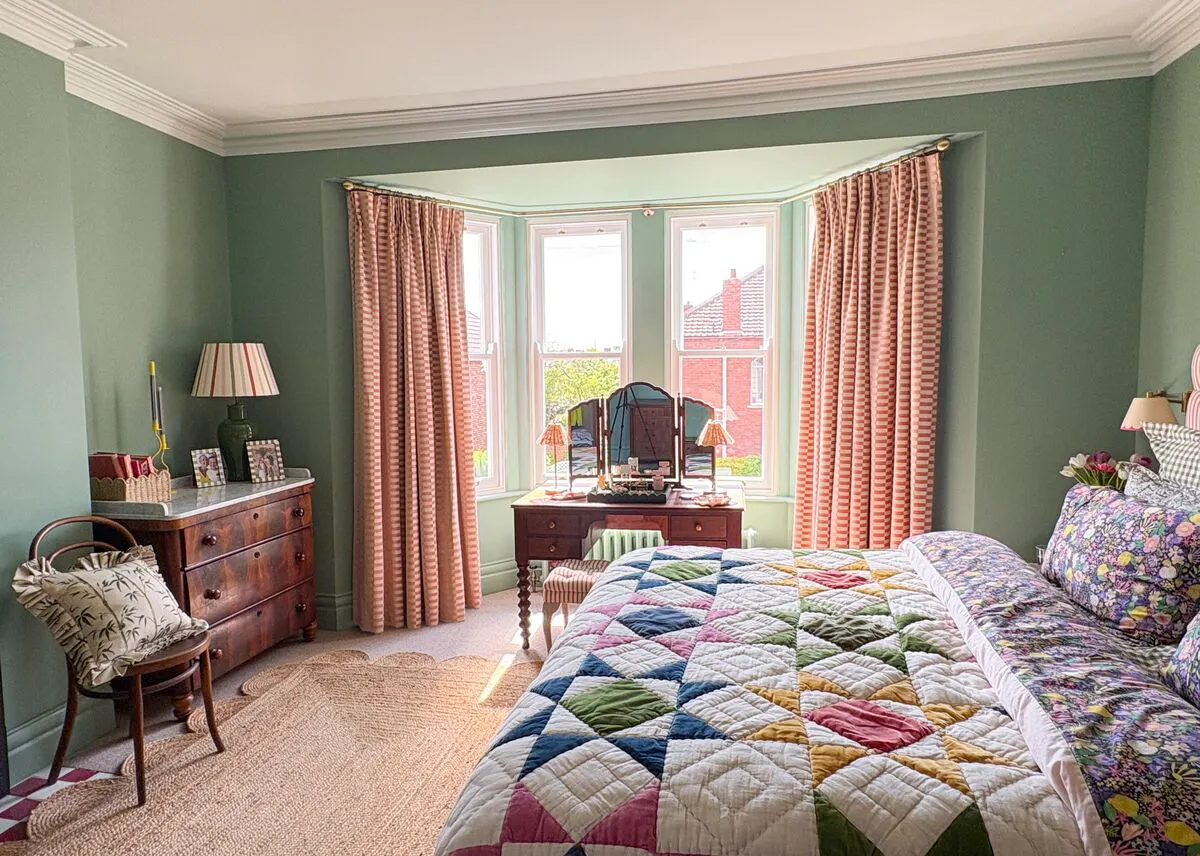
Pale green bedroom with deep recess bay window with curtains in pale salmon with small copper rectangle, open, bed with pinstriped headboard and handmade-style quilt  with accent colours in copper, blue and green reflected in mirror of dressing table in bay.

Comfort in the details

Some of the most familiar geometric motifs come from traditional textiles and handcrafted pieces. The inspiration behind these geometric curtains from our Poodle & Blonde collection - called Tucson Lullaby - comes from the blankets that kept cowboys warm beneath open desert skies.  

The patchwork quilt featured in the room is also a reminder that geometric patterns have been used in homes for generations. Diamonds, triangles and repeated blocks of colour have long been part of quilt-making traditions, creating designs that feel comforting and full of character. 

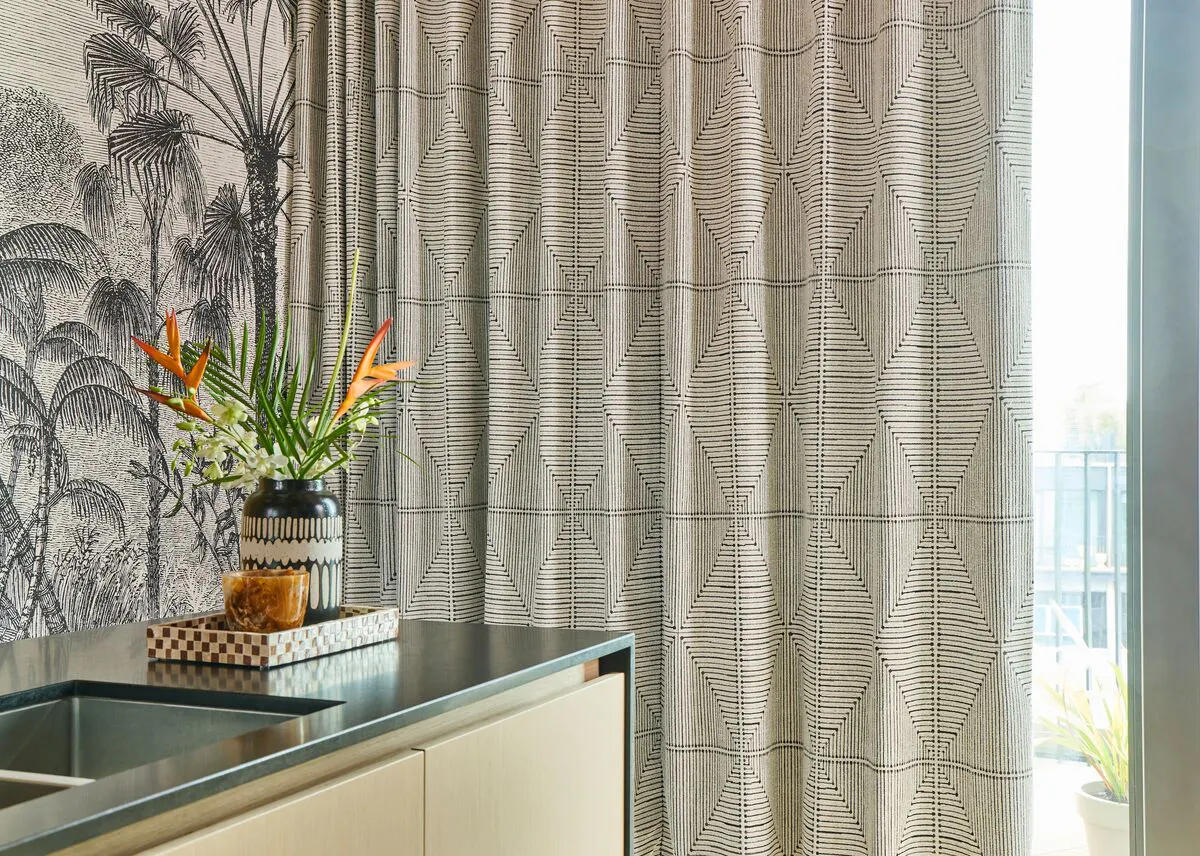
Close-up of a modern interior with geometric patterned curtains, tropical wallpaper and a countertop styled with a vase of flowers.

Finding your perfect pattern

One of the joys of geometric design is that there's no single way to use it. Colour, scale and shape all influence how a pattern is perceived. A geometric can feel playful, elegant, nostalgic, dramatic or relaxed. 

Whether you're drawn to mid-century influences, 70s interiors or quilts passed down through generations, geometric patterns can be adapted to suit almost any style of home. The variety of shapes, colours and scales means there's always a way to make the look your own. 

  • “Mid-century modernism is a style that continues to inspire me and never seems to date. Its geometric shapes, vibrant prints and mixes of textures still feels fresh today.” 

    Margo Selby, textile artist and designer

A few ideas to take away 

  • Geometric patterns are built around repeated shapes and lines.  
  • Geometric design includes stripes, checkerboards, circles, diamonds and abstract motifs.  
  • Repeating a shape throughout an interior can help create a connected scheme.  
  • Larger-scale motifs can shape the feel of a room, helping to define a space. 
  • Geometrics can be inspired by everything from mid-century design to traditional patchwork quilts.  
  • Curved motifs offer a softer alternative to angular geometric designs.  
  • Geometric pattern design can work in contemporary, vintage-inspired and traditional interiors alike. 

Related articles