
Continuing the legacy
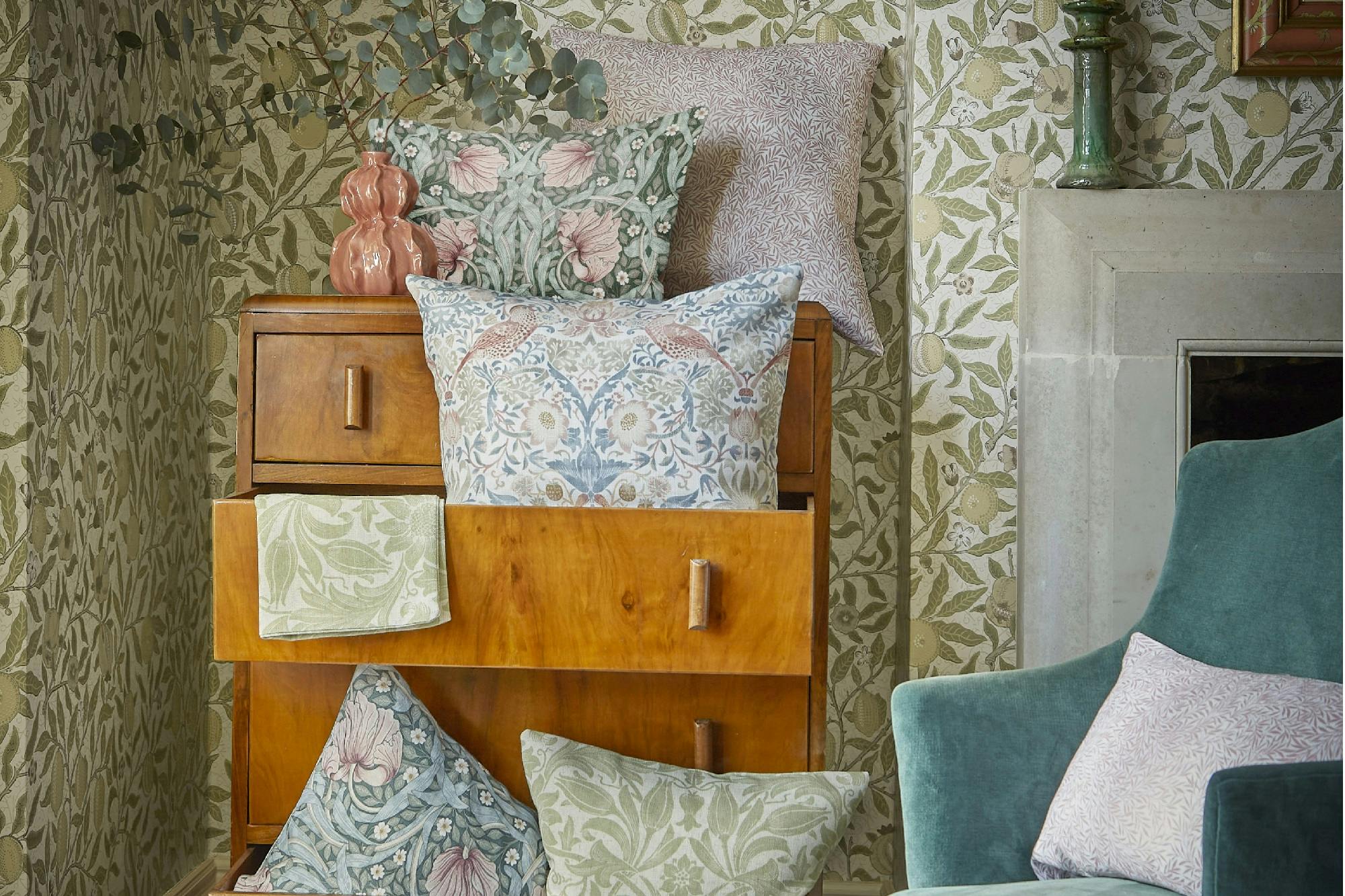
The V&A collaborates with contemporary designers and manufacturers who draw inspiration from Morris’ work, using it as a springboard for products that combine beauty, craftsmanship and purpose - just as he envisioned.

Price Promise

Rated Excellent

Fully Guaranteed

Over 40 years of value
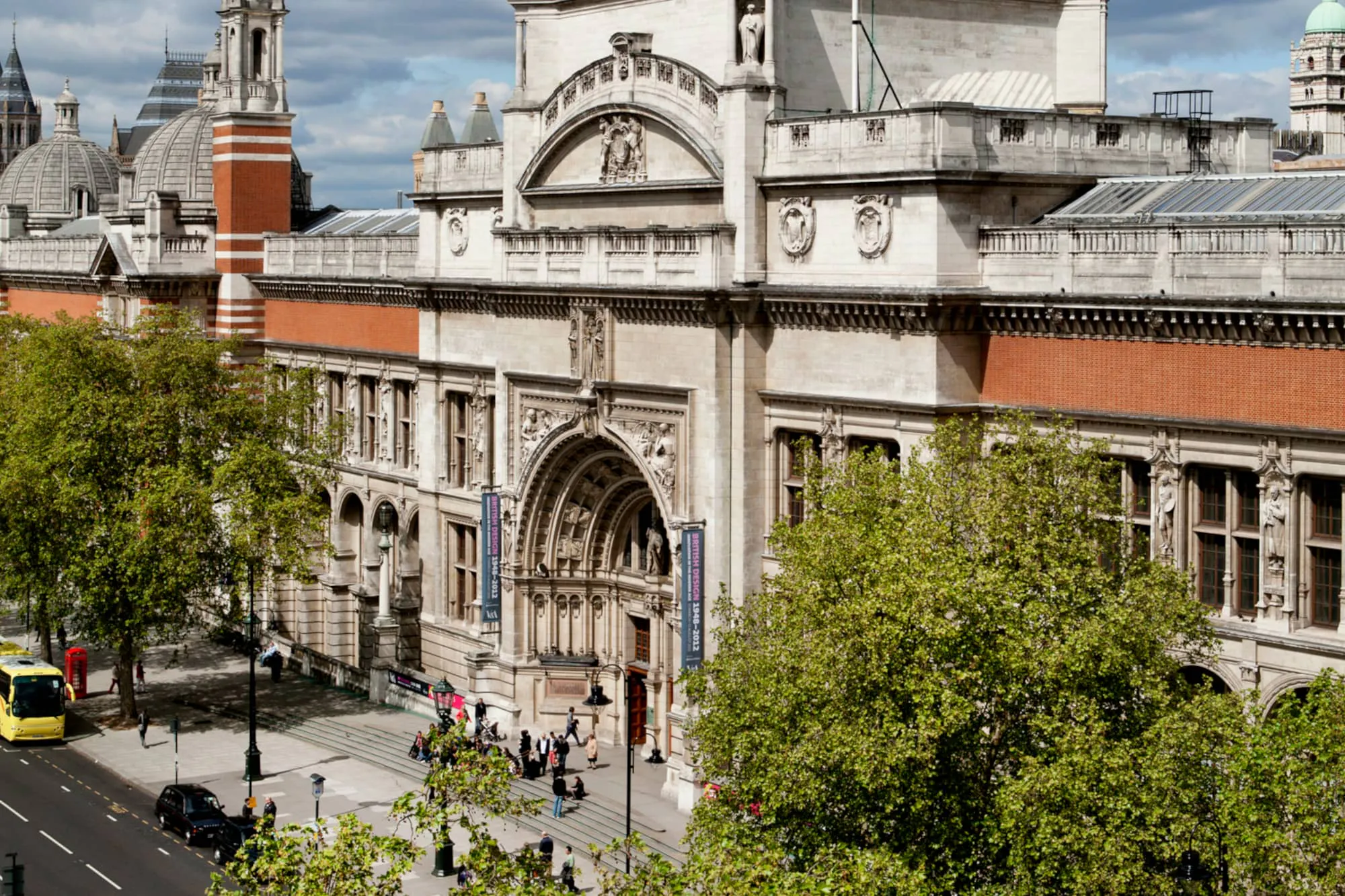
The V&A holds one of the most extensive and comprehensive collections of William Morris’ designs and objects in the world. His legacy is woven throughout the Museum, with works by Morris and his company of craftspeople displayed across nearly every department - from textiles and wallpaper to furniture, ceramics and stained glass. This enduring presence reflects not only Morris’ vast influence on the decorative arts but also the continued relevance of his ideals.
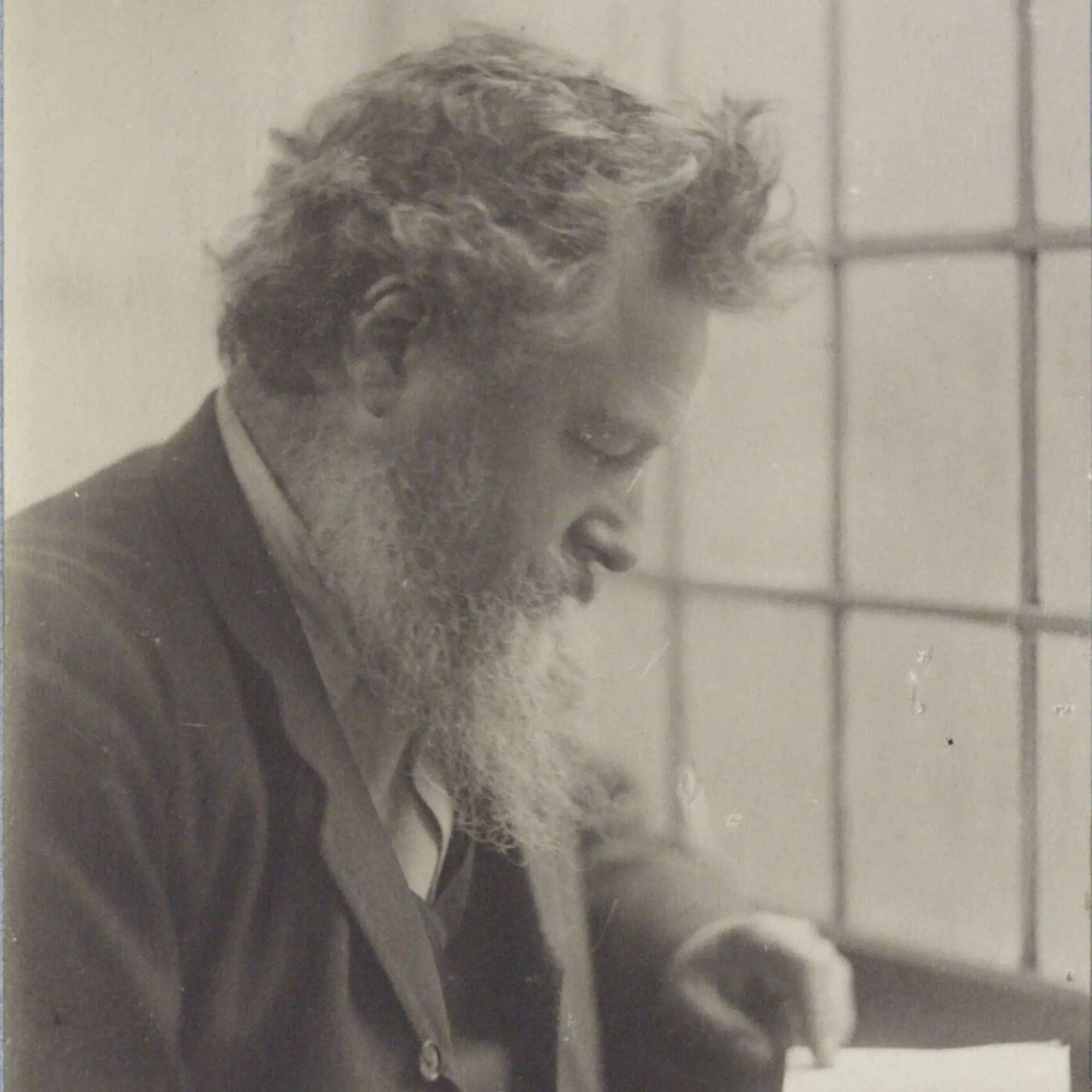
William Morris (1834–96) is widely remembered today for his floral fabrics and wallpaper designs, as well as his famous advice: “Have nothing in your houses that you do not know to be useful or believe to be beautiful”. But beneath the surface of his decorative art lies the passionate vision of a Victorian socialist. Morris was deeply disturbed by the dehumanising conditions of industrial factory work. In contrast, he idealised the medieval world, where he imagined artisans taking pleasure and pride in their work and craft.
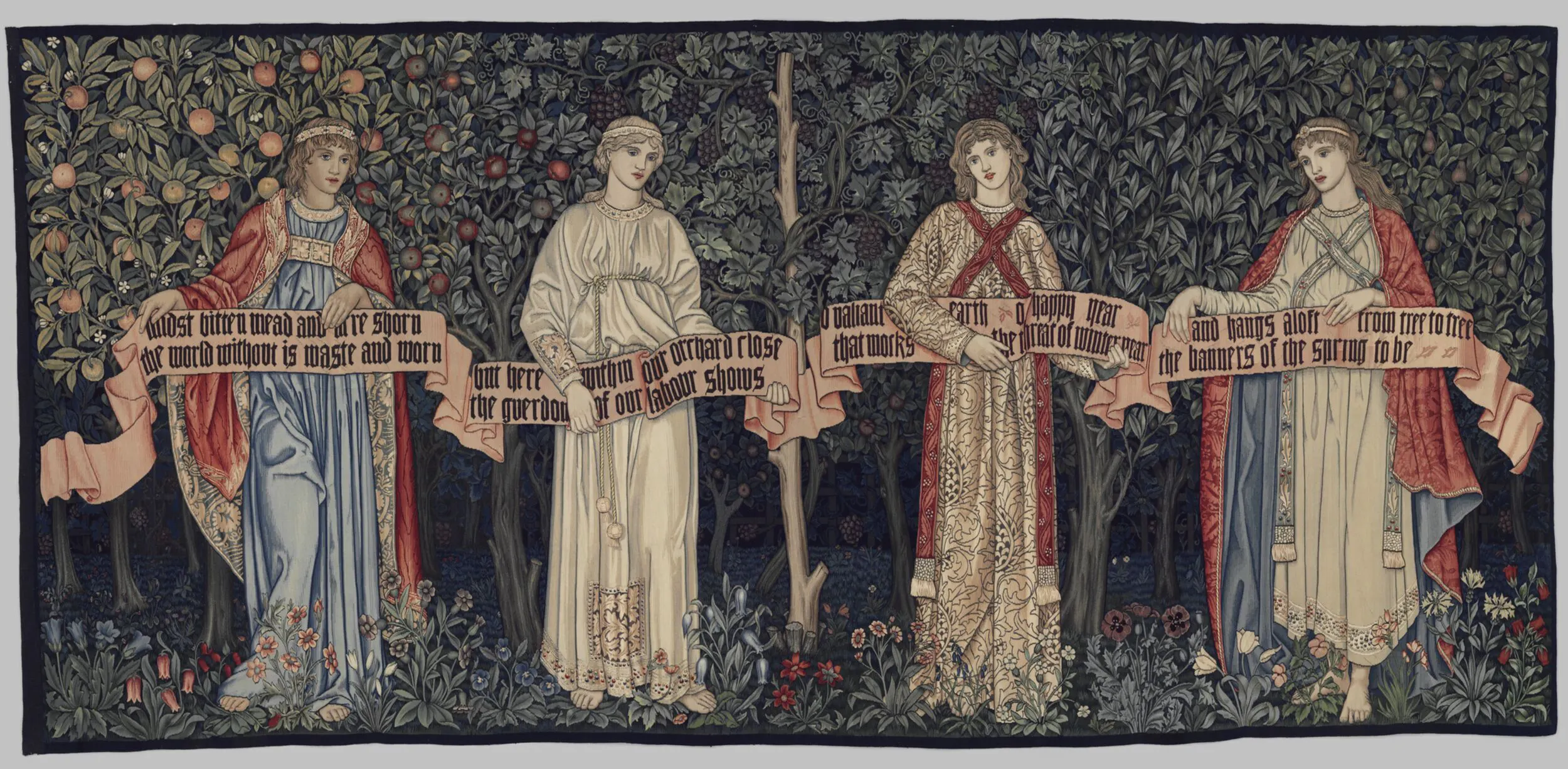
Morris was born in Walthamstow - now East London - into a wealthy upper-middle-class family. His father, a successful stockbroker, significantly increased the family's fortune through investments in copper mining, enabling them to move to the grand mansion, Woodford Hall.
This privileged upbringing placed Morris in a complex position: while he enjoyed the benefits of wealth, he later came to reject its foundations and the social inequalities it represented. Despite this, he remained close to his father, whose antiquarian interests and evangelical Anglican views had a lasting impression.
Morris’ aesthetic was greatly influenced by his early exposure to medieval art, which included touring old churches and taking brass rubbings. He developed a lifelong interest in Gothic architecture and vestments when his father took him to Canterbury Cathedral.
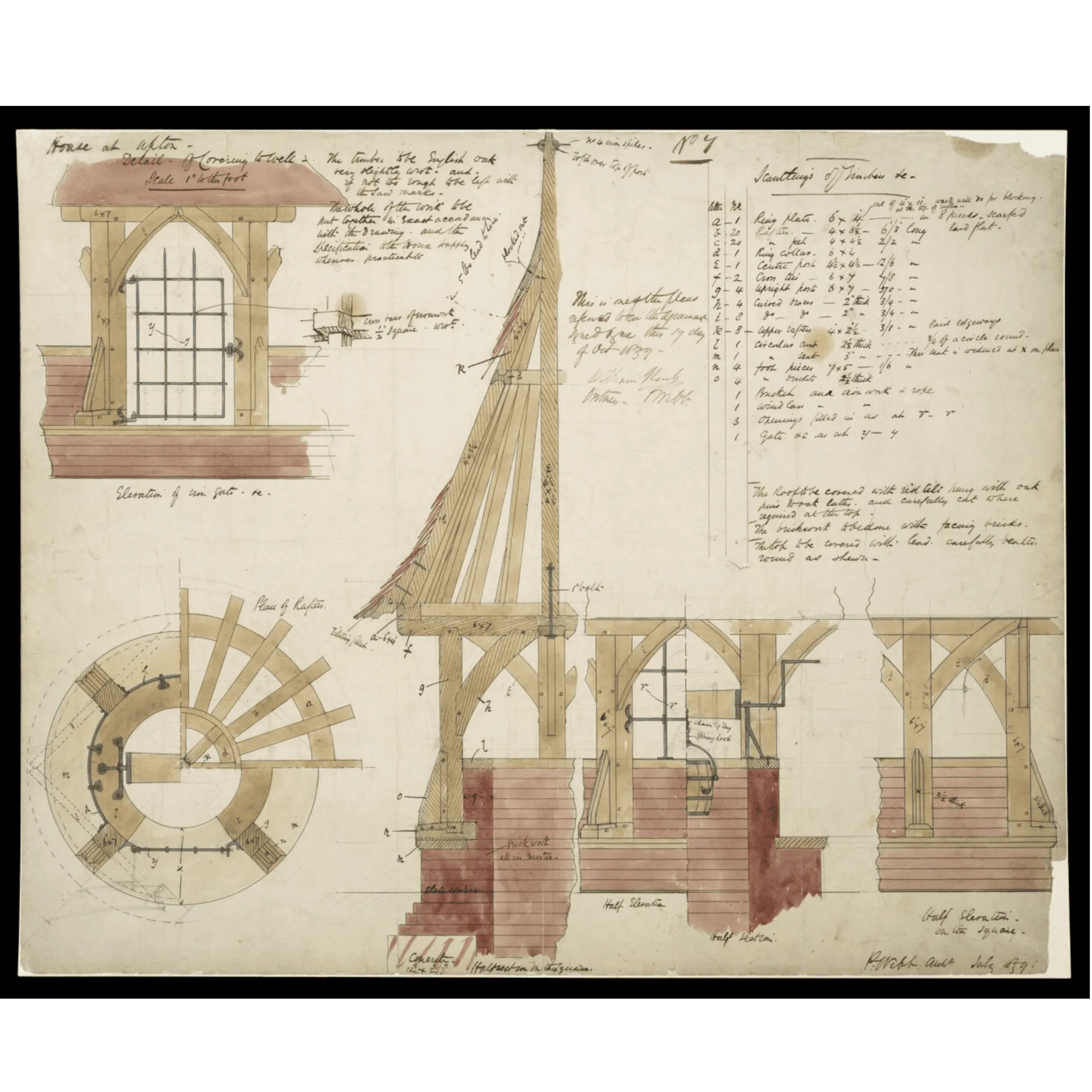
While at Oxford, Morris met Jane Burden, the daughter of an ostler or stableman, whom he married after a year-long engagement. She was introduced to his circle by Dante Gabriel Rossetti, who admired her striking beauty and invited her to model for the Pre-Raphaelites.
After a six month honeymoon traveling through Europe, immersing themselves in the art and architecture that deeply inspired their shared aesthetic, they moved into Red House in Kent - a home Morris designed in collaboration with friend and architect, Philip Webb. Red House became a symbol of their creative ideals and a gathering place for like-minded artists. It was here they enjoyed a brief but idyllic period of domestic life, marked by artistic collaboration and the birth of their two daughters, Jenny and May.
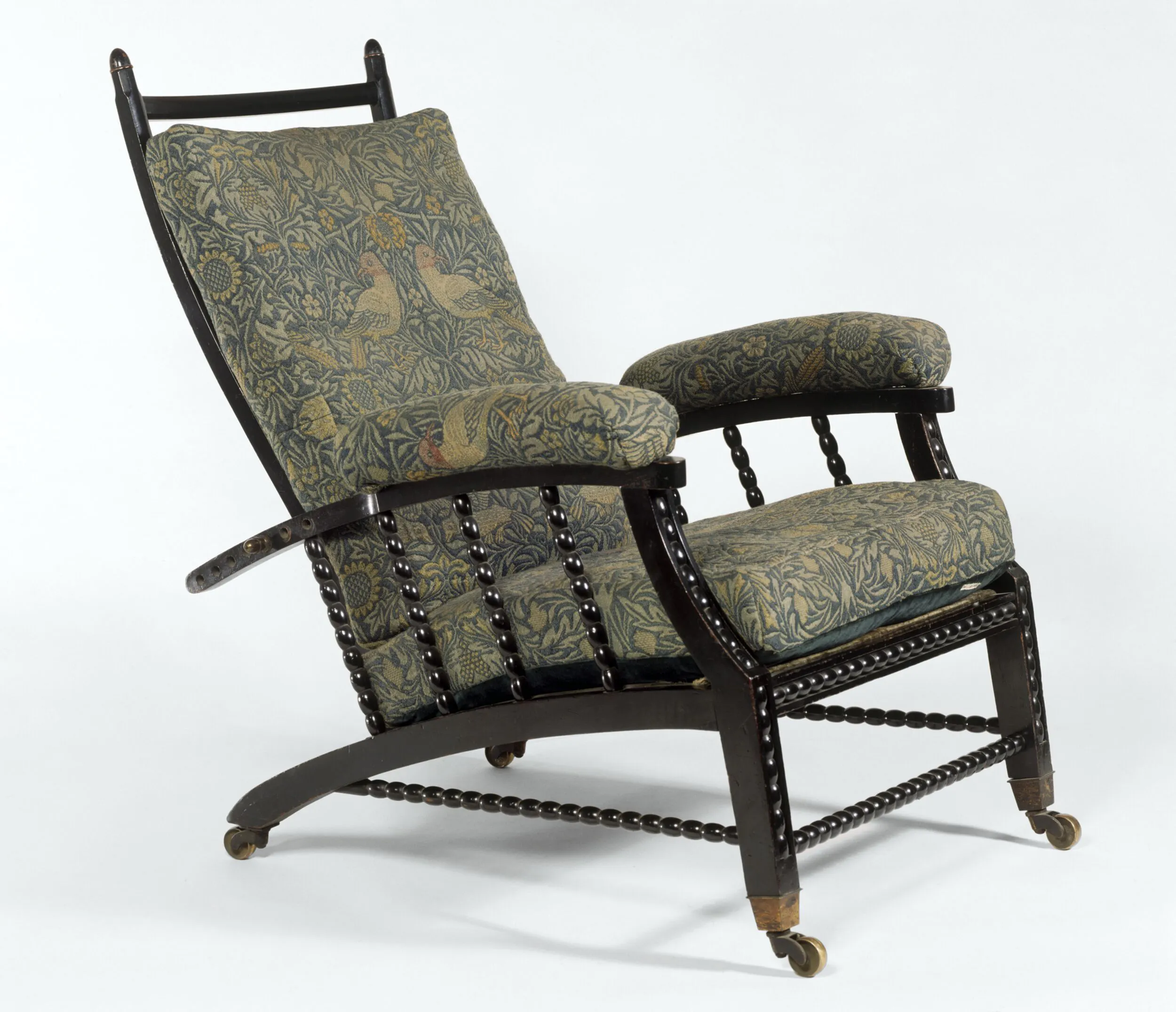
Red House marked a turning point in Morris’ artistic and social ideals - a physical embodiment of his belief that architecture should connect people to the earth and the surroundings in which they live. The house was built from local red brick and tiles in a deliberately Gothic and irregular style, with turrets that evoked the medieval past. Nestled in an orchard yet conveniently near a railway station, it allowed Morris to retreat into nature while remaining connected to London.
Red House was more than a home; it also embodied the idea of friendship and fellowship. Because they couldn’t find anything manufactured that suited their tastes, Morris and Jane furnished it with handcrafted pieces, paintings by Burne-Jones and Rossetti, and bespoke furniture designed by Webb, and it was out of that cooperative endeavour that the firm of Morris, Marshall and Faulkner & Co. was born.
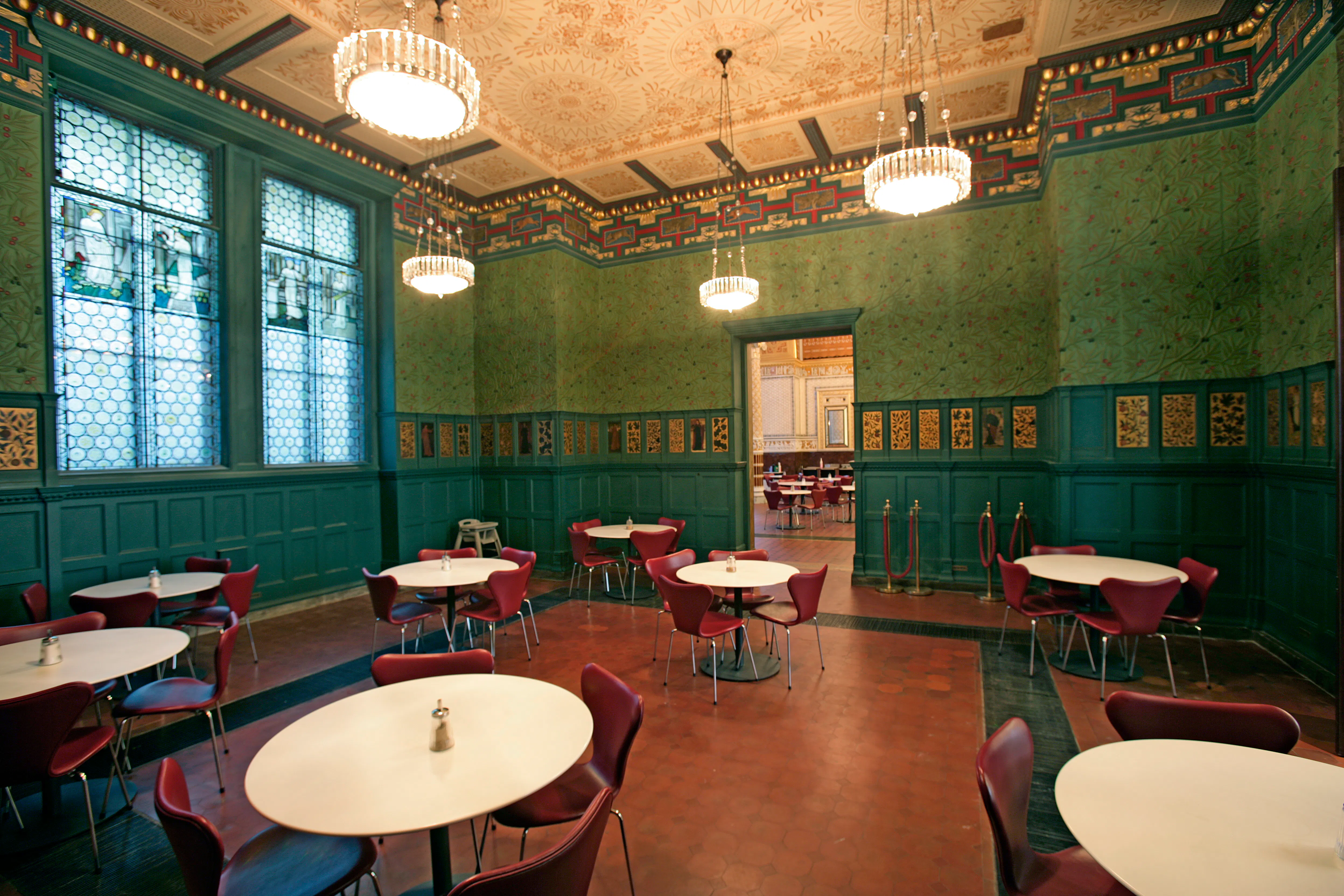
Soon after its founding, the company was invited to exhibit at a trade show - the London 1862 Exhibition - an important opportunity for the young enterprise. Among the visitors was Sir Henry Cole, the influential founding director of the South Kensington Museum (now the V&A).
Impressed by the firm’s work, Cole commissioned Morris to design the decoration for the Green Dining Room, which would later be known as the V&A Café. This commission, alongside another for the Armoury at St. James’ Palace, marked the firm’s first major secular projects and significantly raised its public profile and Morris’ reputation.
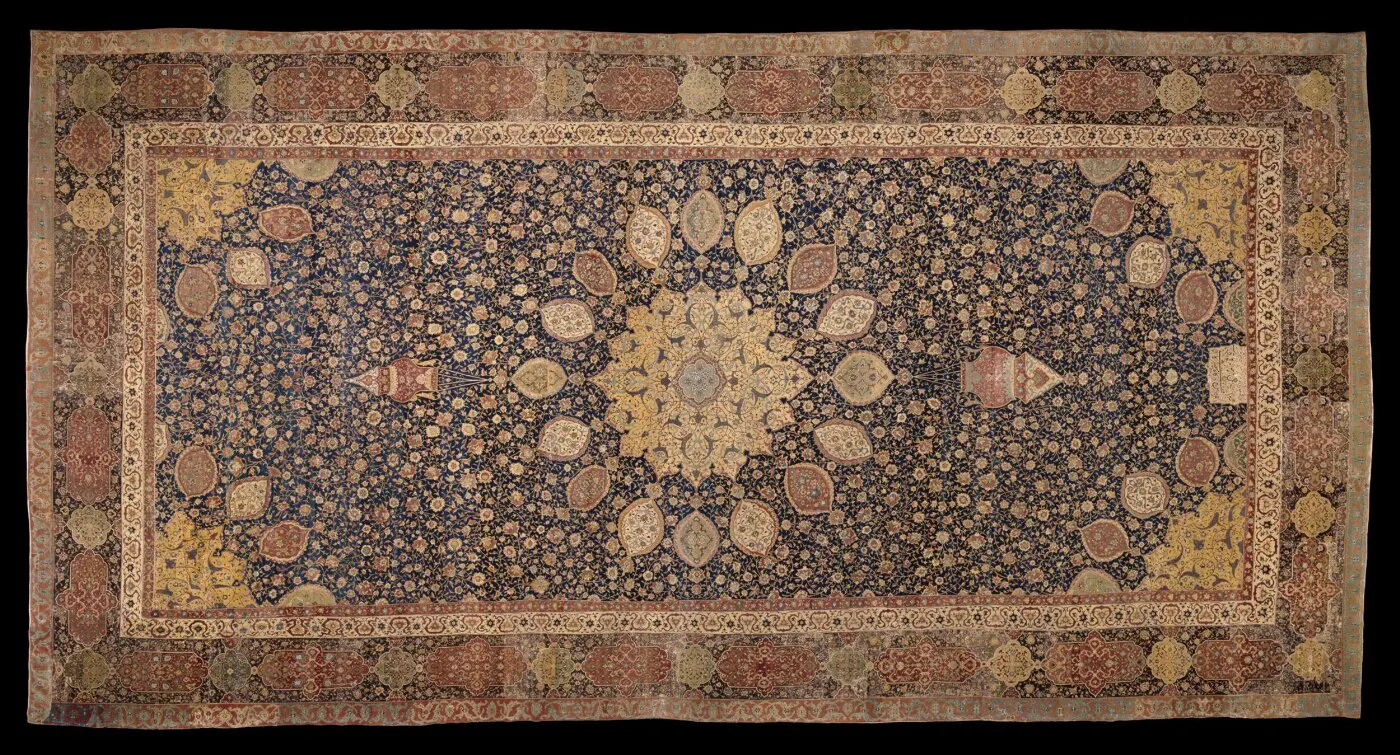
By 1870 Morris was acting as an Art Referee for the Museum, giving advice on the acquisition of textiles. His knowledge of the history of Middle Eastern carpets was used extensively by the V&A and due to his good advice the collection acquired two of the Museum’s finest Persian pieces - the Ardabil and Chelsea Carpets. Traces of Morris’ inspiration by the Museum’s collections are to be found in almost every curatorial department. Morris himself acknowledged that he, “happily used the Museum more than any man living”. The knowledge that he accumulated made a deep impression and influence on his work and the relationship between Morris and the V&A appears to be certainly a great benefit and advantage to both.
The V&A collaborates with contemporary designers and manufacturers who draw inspiration from Morris’ work, using it as a springboard for products that combine beauty, craftsmanship and purpose - just as he envisioned.
William Morris championed a philosophy that blended beauty, craftsmanship and community. Nearly 150 years later, this legacy endures as we continue to draw inspiration from the natural world, translating its forms into textiles and furnishings that celebrate our bond with the earth.
Amelia Calver
Enter your email address to receive updates on our latest collections, trends and exclusive offers.

40 years of local service

Rated Excellent

Advisors local to you

2 year quality guarantee